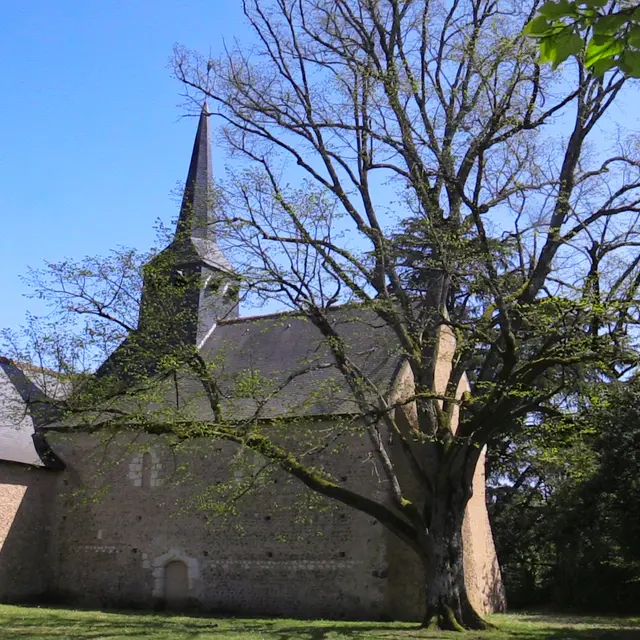
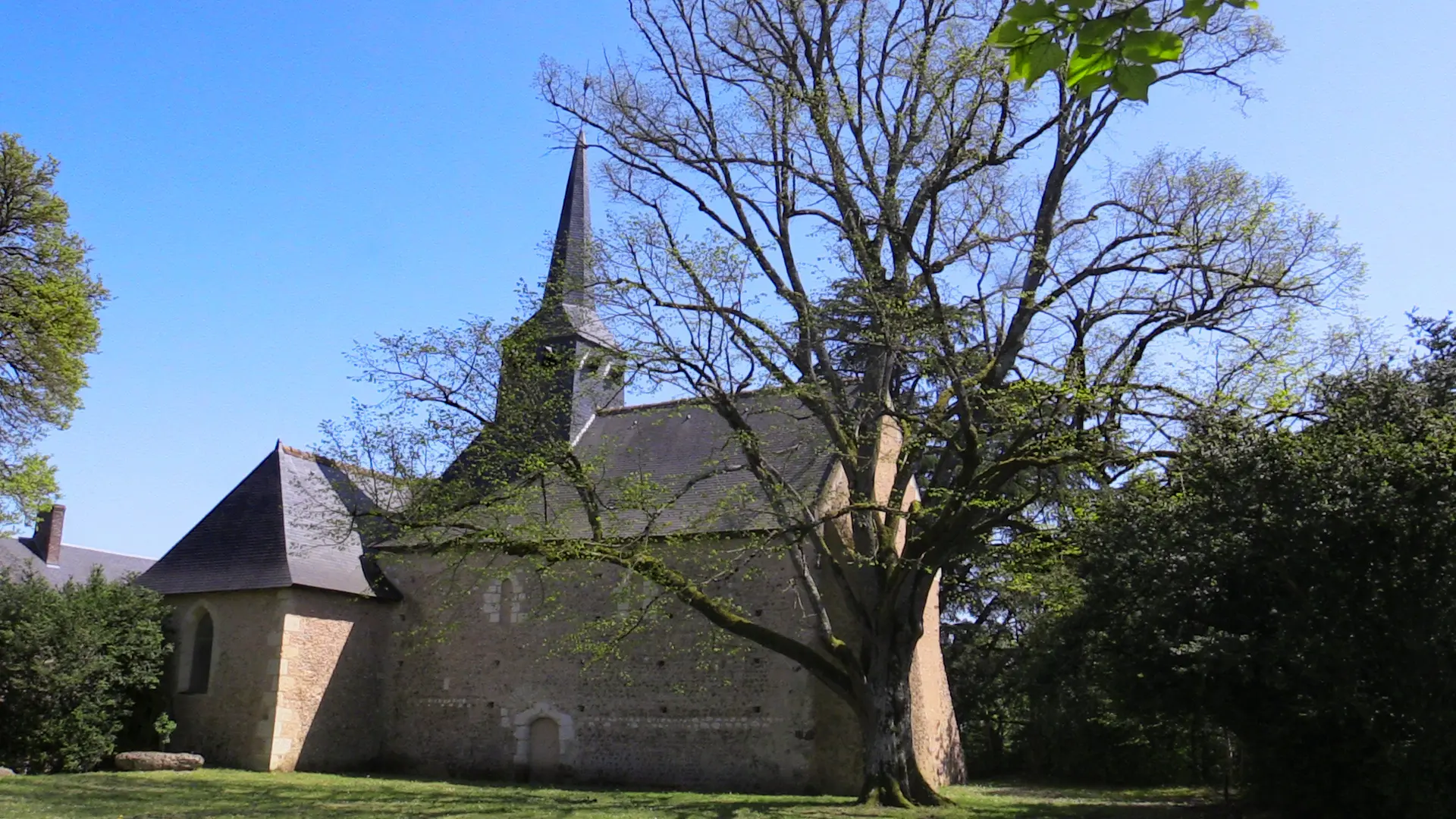
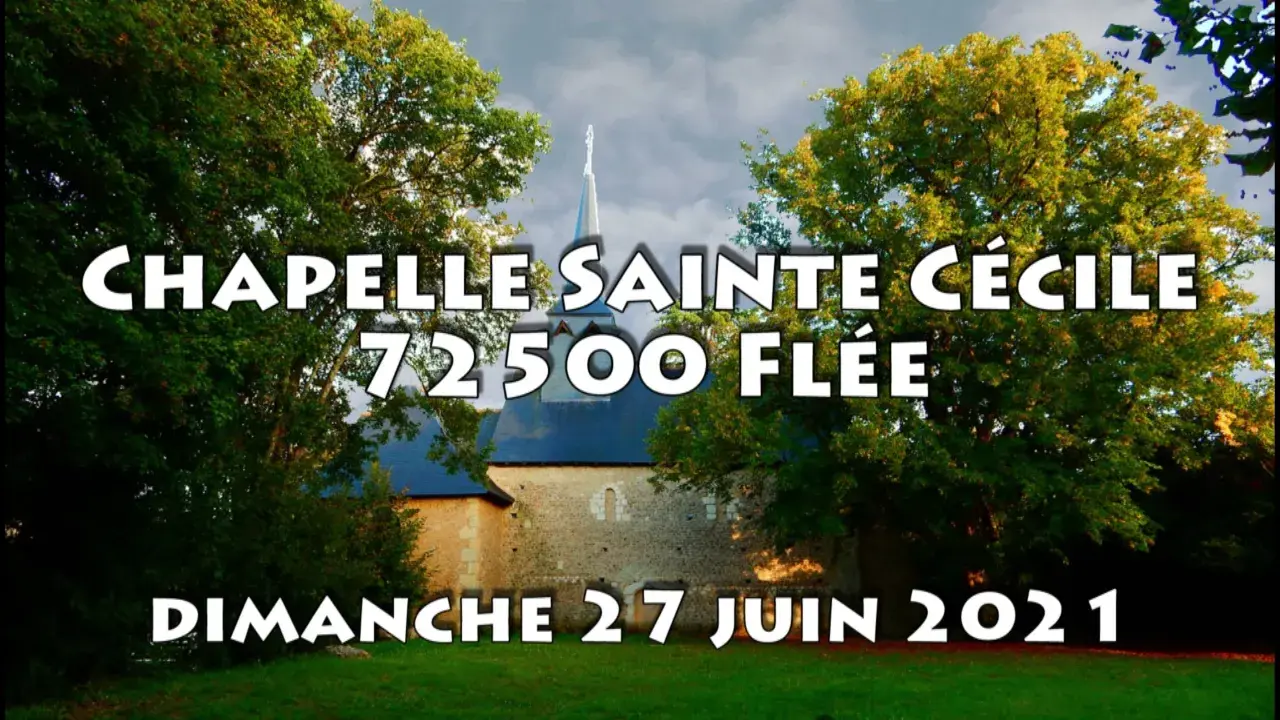
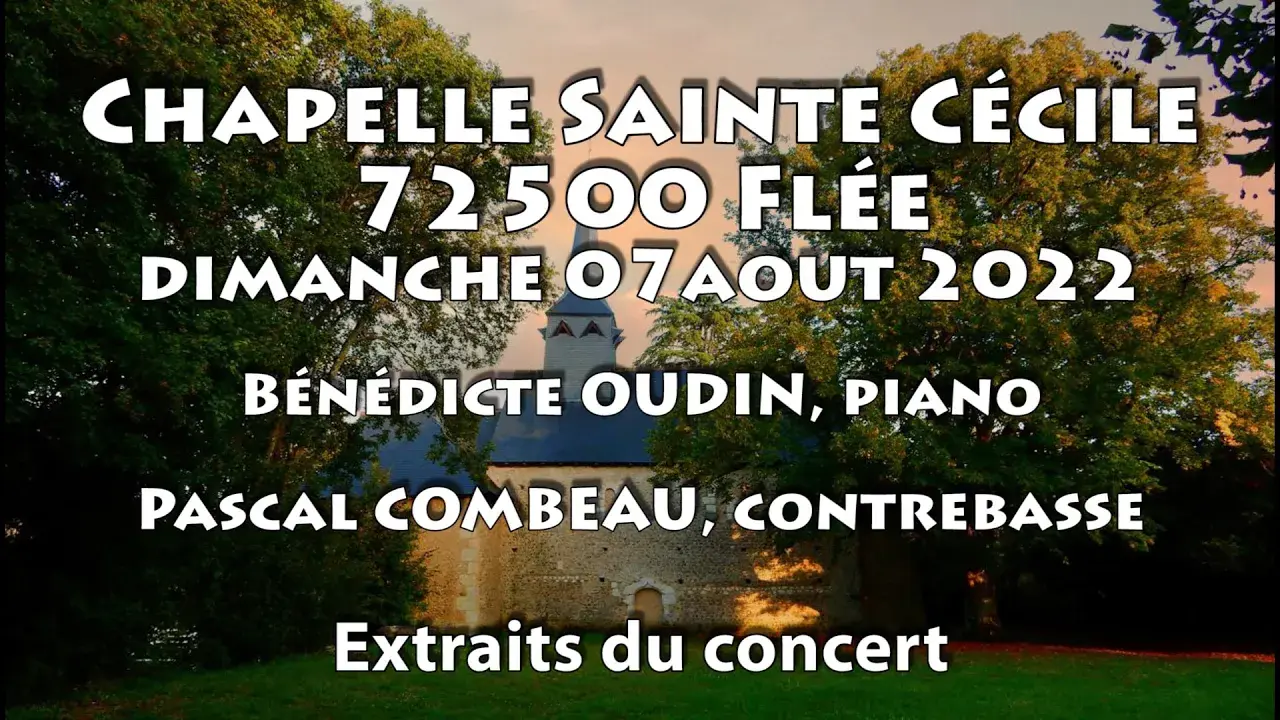
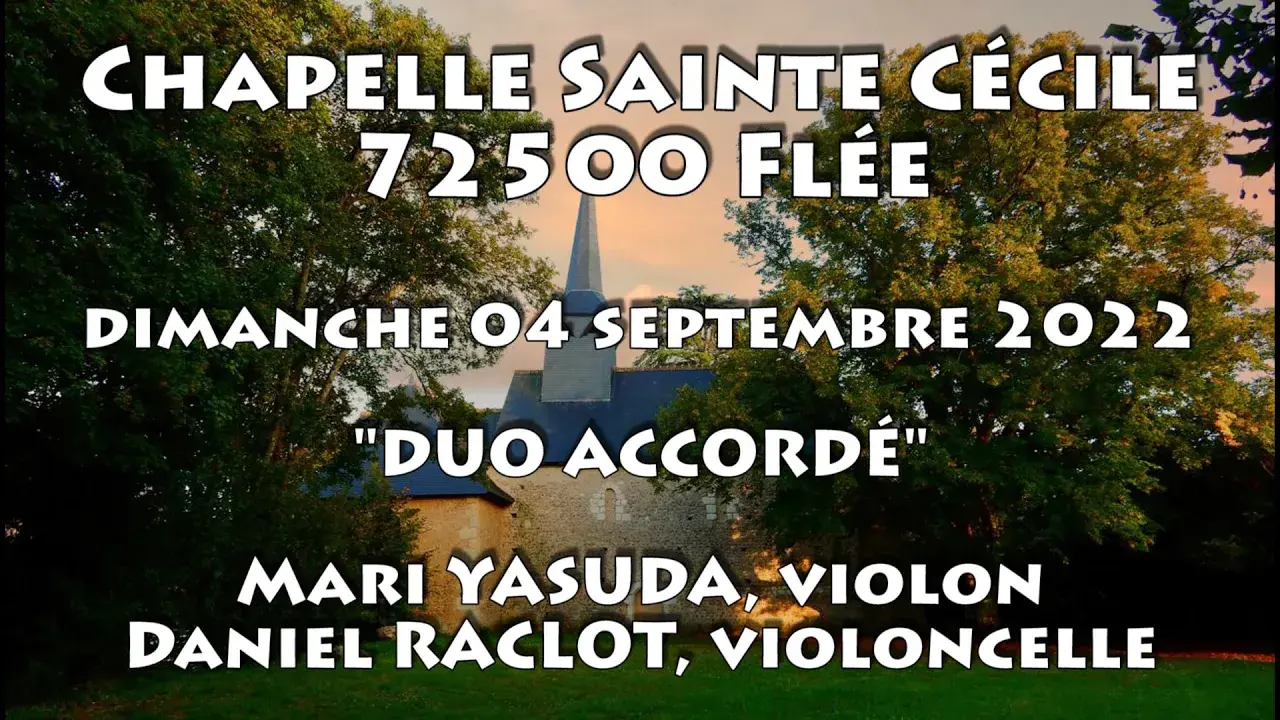
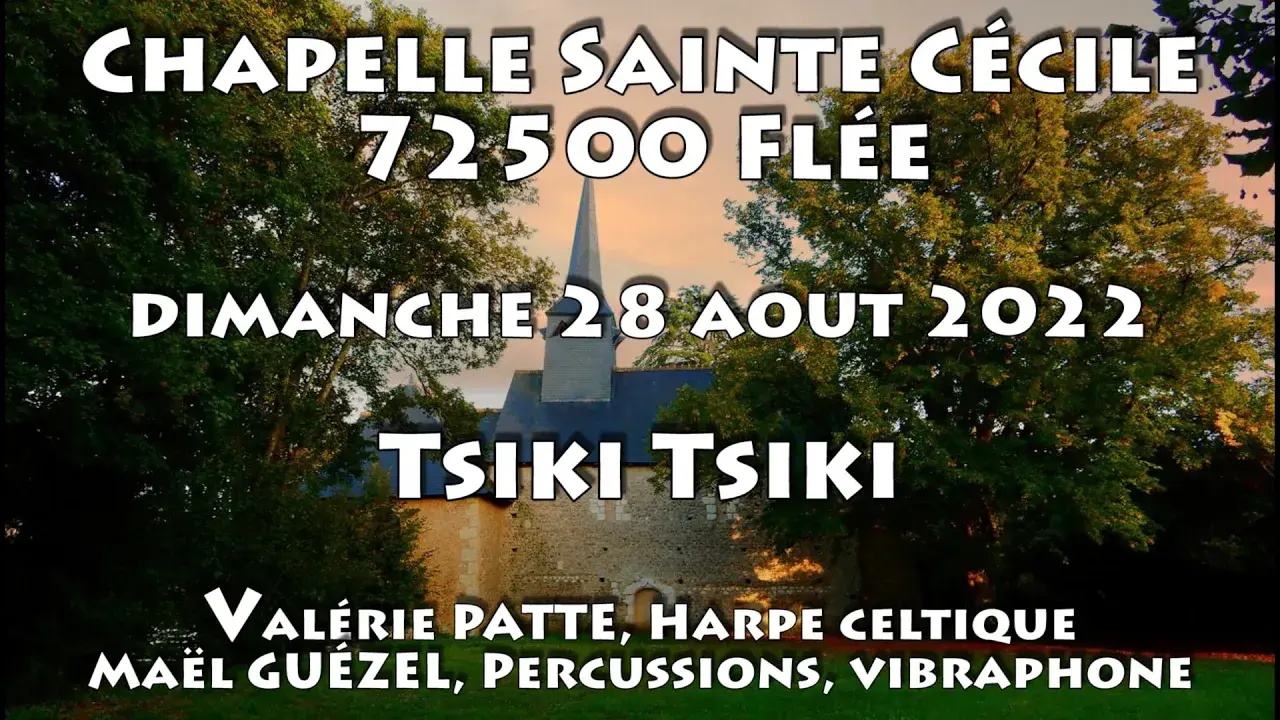
A beautiful little 12th-century church, Sainte Cécile, on a long GR path, has a long history dating back to Neolithic times. A peaceful place for walks, hikes and meditation, but also for celebrations and get-togethers during the various events.
The Sainte-Cécile chapel stands on a promontory sixty-three metres above the Loir valley.
An exceptional and ancient ninety-three metre long shrubbery surrounds the chapel and the two former cemeteries, one to the north marked by an oak cross and the children's necropolis to the south.
The Friends of Sainte-Cécile, an association under the law of 1901, works in partnership with the commune to promote cultural activities and help restore the chapel.
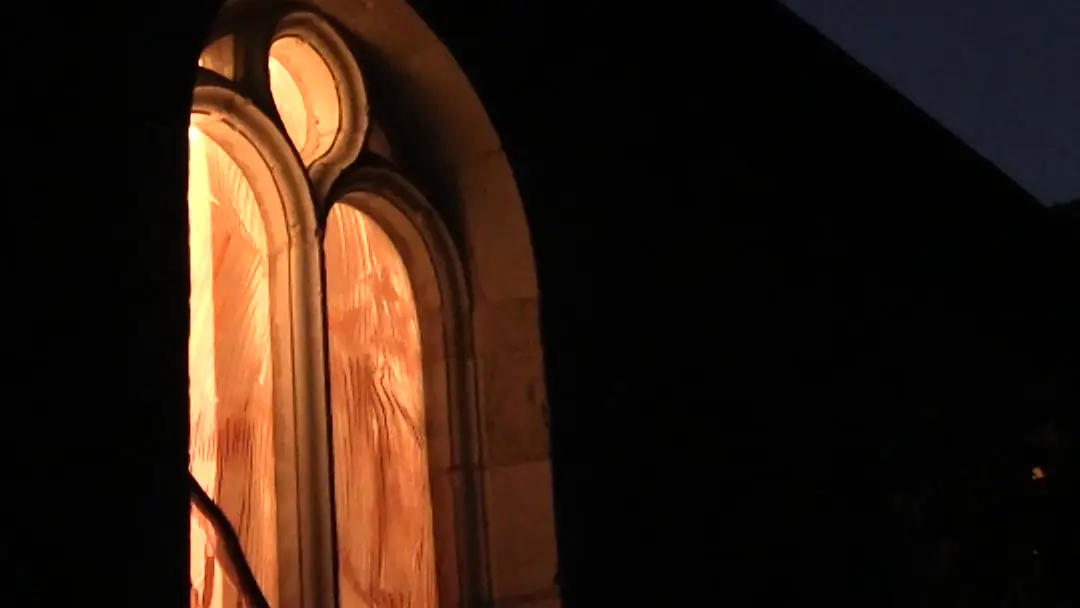
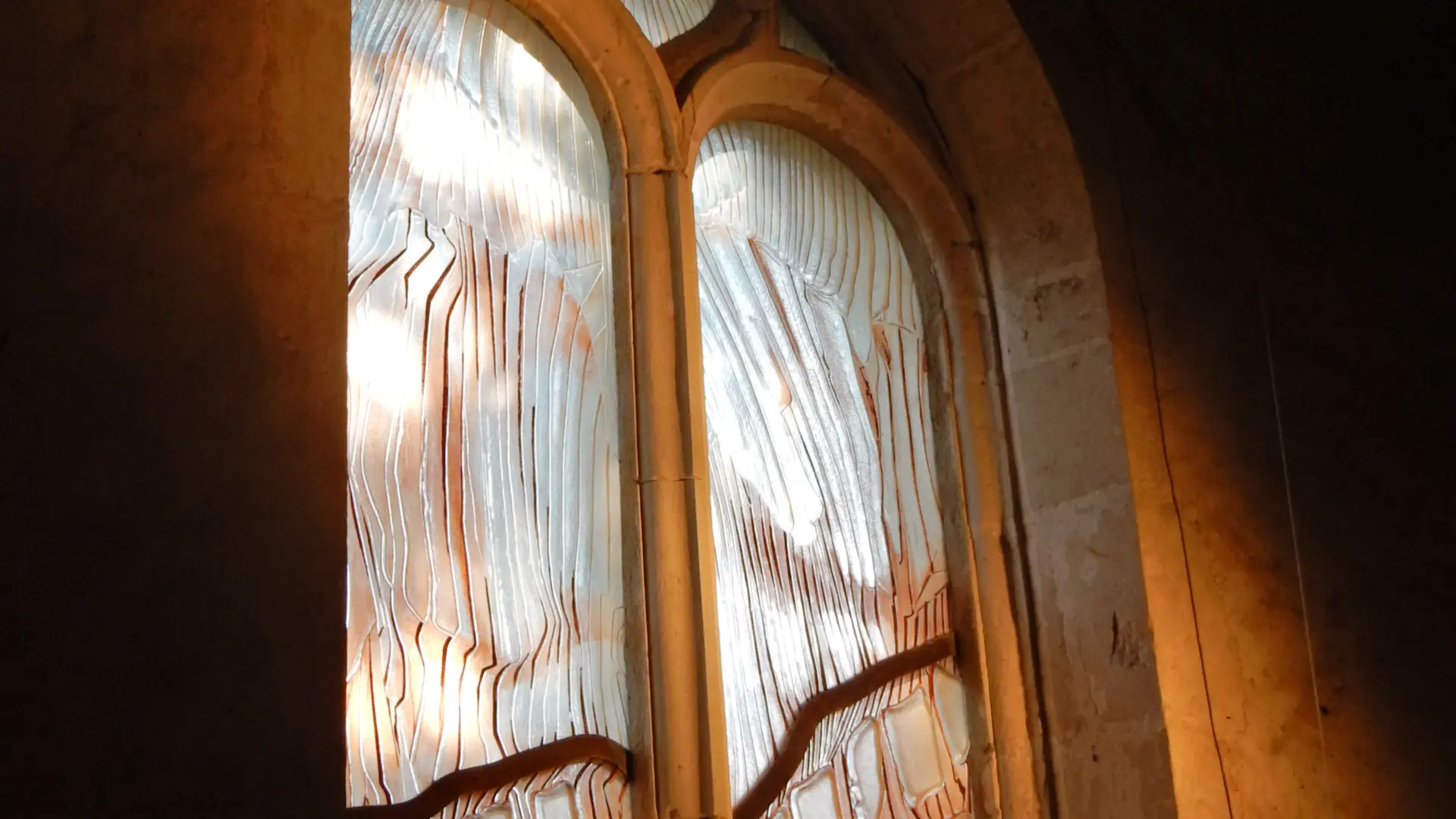
The two Romanesque windows in the north wall and the
the oculus above the main door, reopened,
have had stained glass windows created
in harmony with those of the existing nave.
nave.
The door to the dead in the north wall has been reopened
back onto the old cemetery area
surrounded by the shrubbery.
The work was funded by the Direction Régionale des Affaires
Departmental and regional subsidies, and donations
regional subsidies, donations collected through the Fondation du
Fondation du Patrimoine, the prize received as a winner of the
of the Fonds de soutien aux métiers d'art, the participation of the
of the association "Les Amis de Sainte-Cécile", thanks to the loyalty
thanks to the loyalty of its members and donations to the hats at concerts.
After many vicissitudes linked to the passage of time, the Revolution and maintenance difficulties, major restorations were necessary.
2005 saw the first restoration of the framework and roof of the north transept, followed in 2009 and
and 2010, under the direction of Marie Suzanne de Ponthaud,
chief architect of the Monuments Historiques.
In 2010 and 2011, two archaeological excavation campaigns led by Antoine Guicheteau and Guillaume
Marie revealed traces of "funerary and domestic occupations from the Middle Ages to the present day". (Reports on
on the association's website).
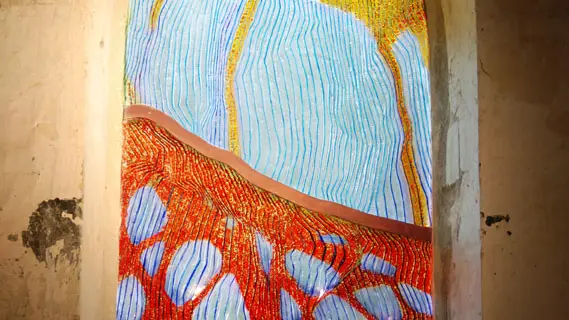
The stained glass windows in the south aisles of the nave and transept, on the theme of music
The stained glass windows in the south bays of the nave and transept, on the theme of "Gregorian jazz" music, were installed in 2018 (designed and produced by Sylviane Monthulé
artist, and Éric Boucher, glass artist, Durtal, Maine et Loire).
The interior restoration campaign in
2024-2025 under the direction of Léo Cany-Paris,
heritage architect, involved close collaboration
close collaboration between the architect
the town hall, the association and the craftsmen and artisans
artisans and craftsmen.
Probing the walls to uncover the paintings
under the whitewash by Géraldine Fray in
Géraldine Fray in 2022, followed by restoration work by Angelo
by Angelo Strazzeri and then Benoit Tendero of Arthema have enabled the
paintings from the 12th and 15th centuries, several coats of arms on
15th centuries, several coats of arms on a grey mourning bed from the
around the nave, as well as recurring coats of arms on the
the nave, as well as recurring coats of arms on the 18th century black
transept.
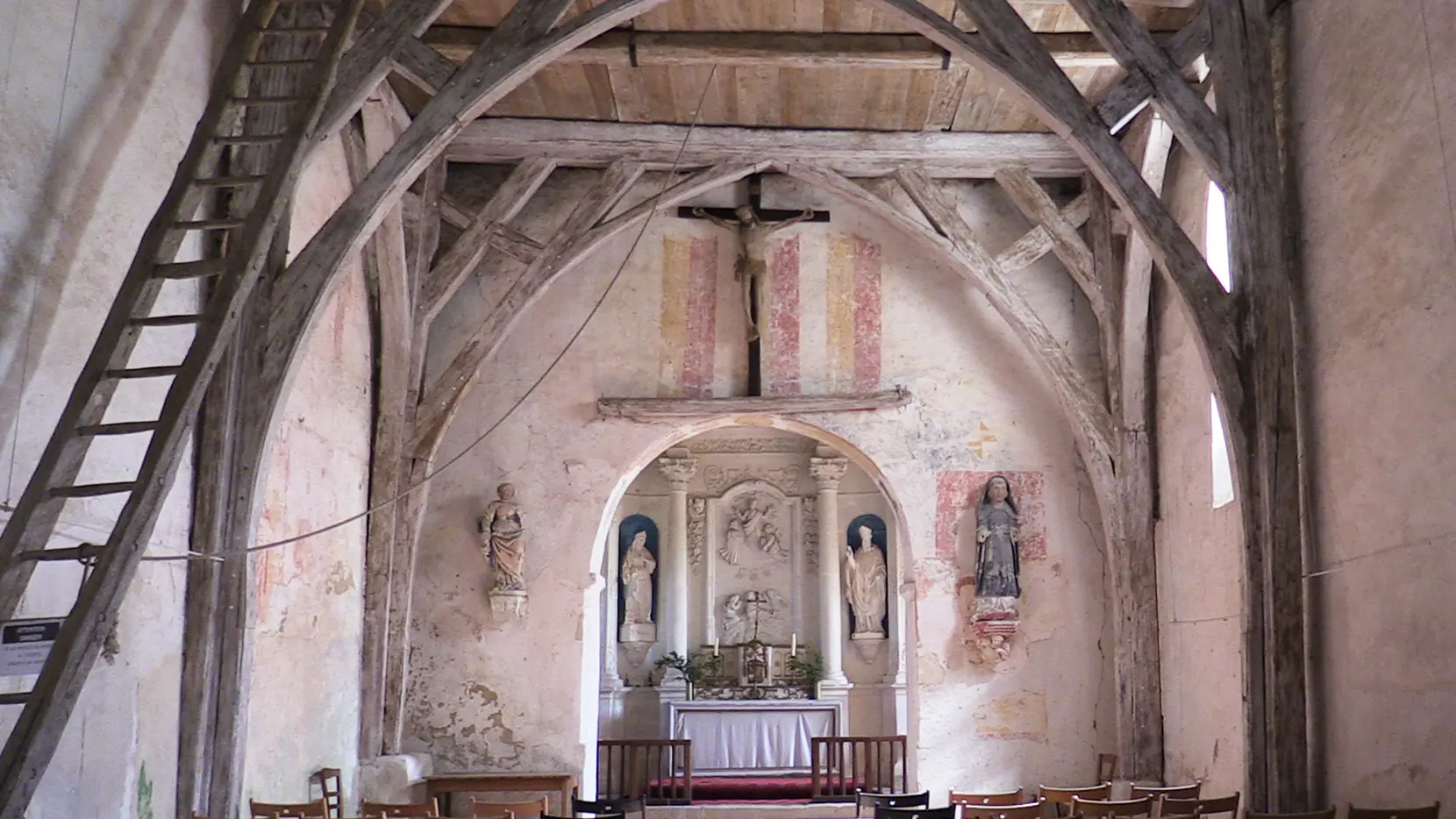
The steeple with its spire was added to the nave frame in the 17th century, supported by the interior stool.
The three altarpieces were installed in the 18th century and listed in 1929.
Sainte-Cécile Chapel was the parish church of the village of Sainte-Cécile,
formerly annexed to the fiefdom of Ourne. It was in 1807 that the village of Sainte-Cécile
was attached to Flée by imperial decree.
In 1824 and again in 1930, the dilapidated chapel was saved from sale by a
the mayor and the prefect. In 1846 and 1885
financed by donations were carried out to consolidate the church, which was in danger of falling into ruin.
In 1872, a decree dated 24 October renamed the church the Chapelle de secours
Sainte-Cécile.
Until the mid-twentieth century, the church was the site of an annual
a harvest festival and a pilgrimage to Saint Gilles, whose
Gilles, whose statue is in the church.
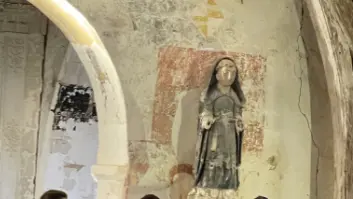
In 1928, Suzanne Trocmé discovered
fragments of 15th century wall paintings in ochre in the
in ochre, in the nave, Saint Roch and a bishop holding a book
holding a book, which she recorded.
The intrados of the triumphal arch, decorated with an "a
fresco" depicting the offering of Cain and Abel on either
on either side of the hand of God, dates from the 12th century.
The chapel was listed as a Historic Monument on 21 December 1984.
The current building dates from the late 11th century.
century, thanks in particular to the joinery and
the openings in the north wall of the nave in the
Romanesque style typical of rural churches
in Maine. The choir with its flat chevet was
was built around the 14th or 15th century and
as was the transept.
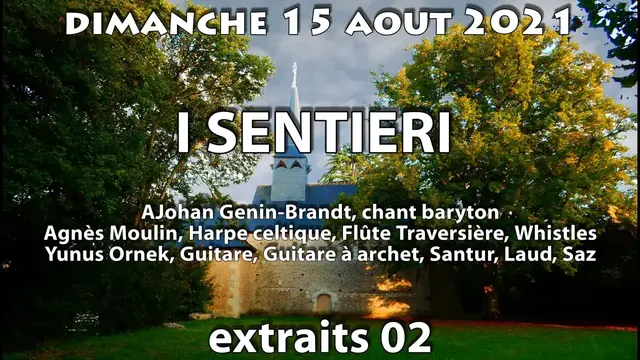
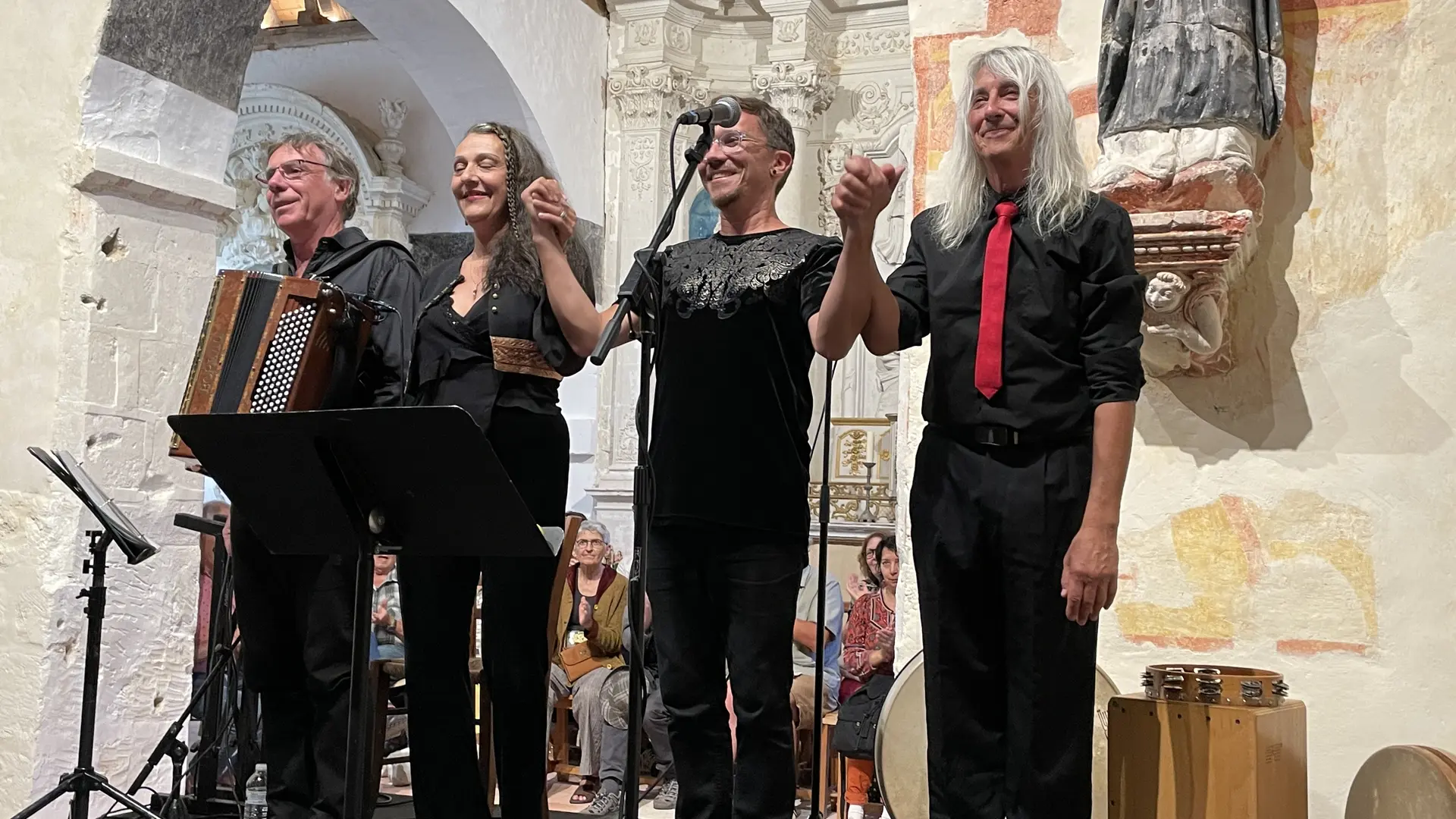
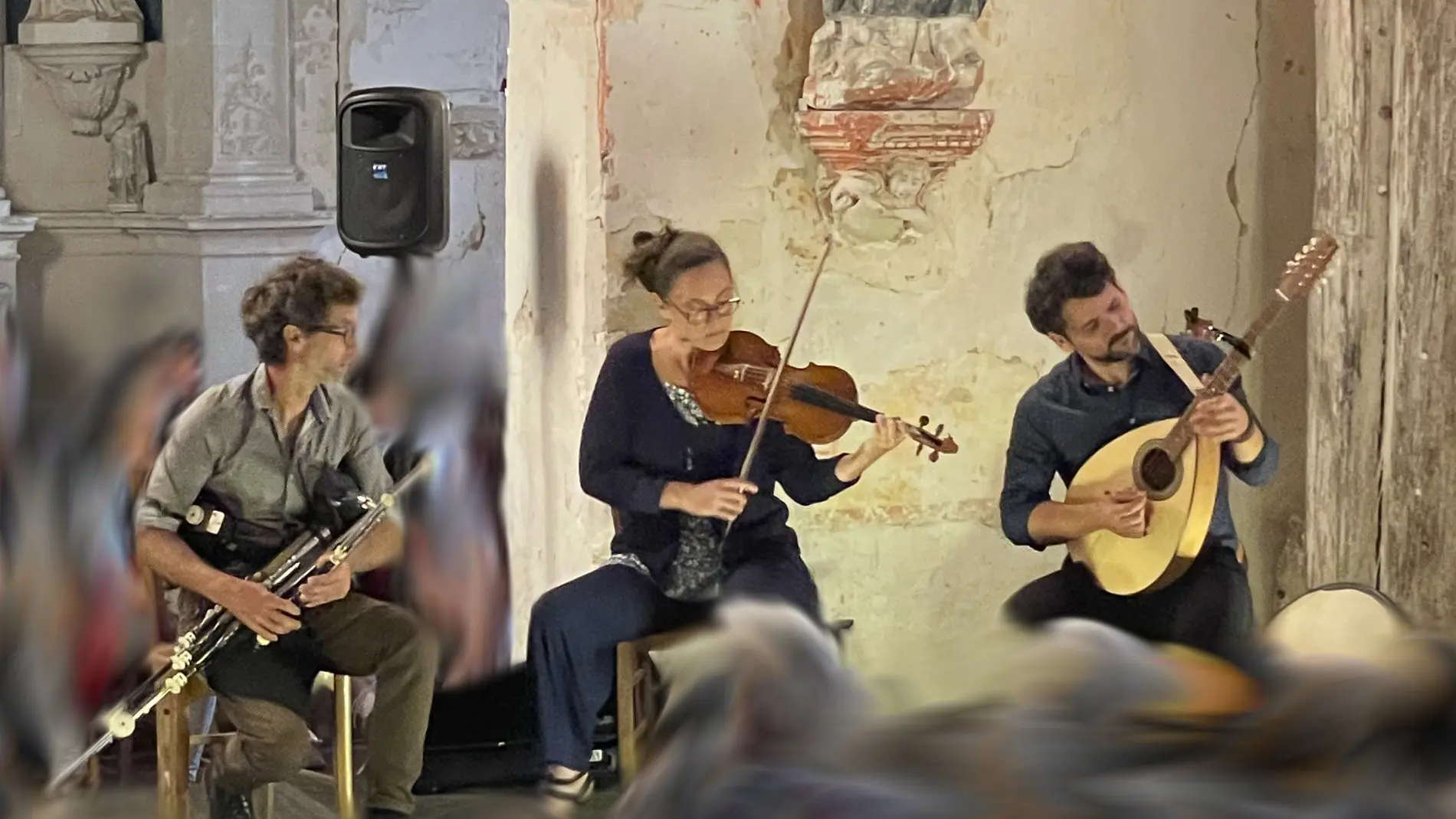
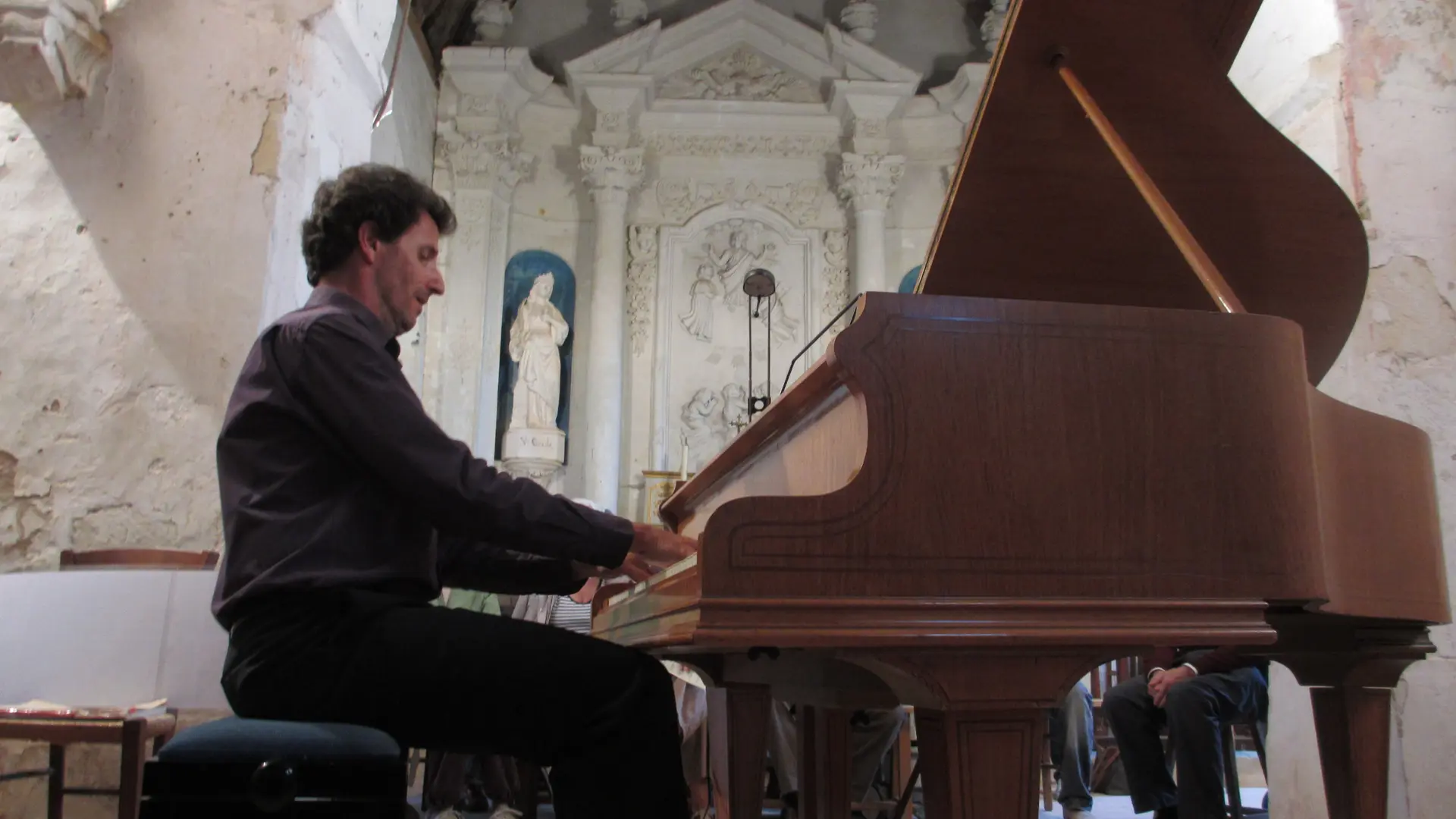
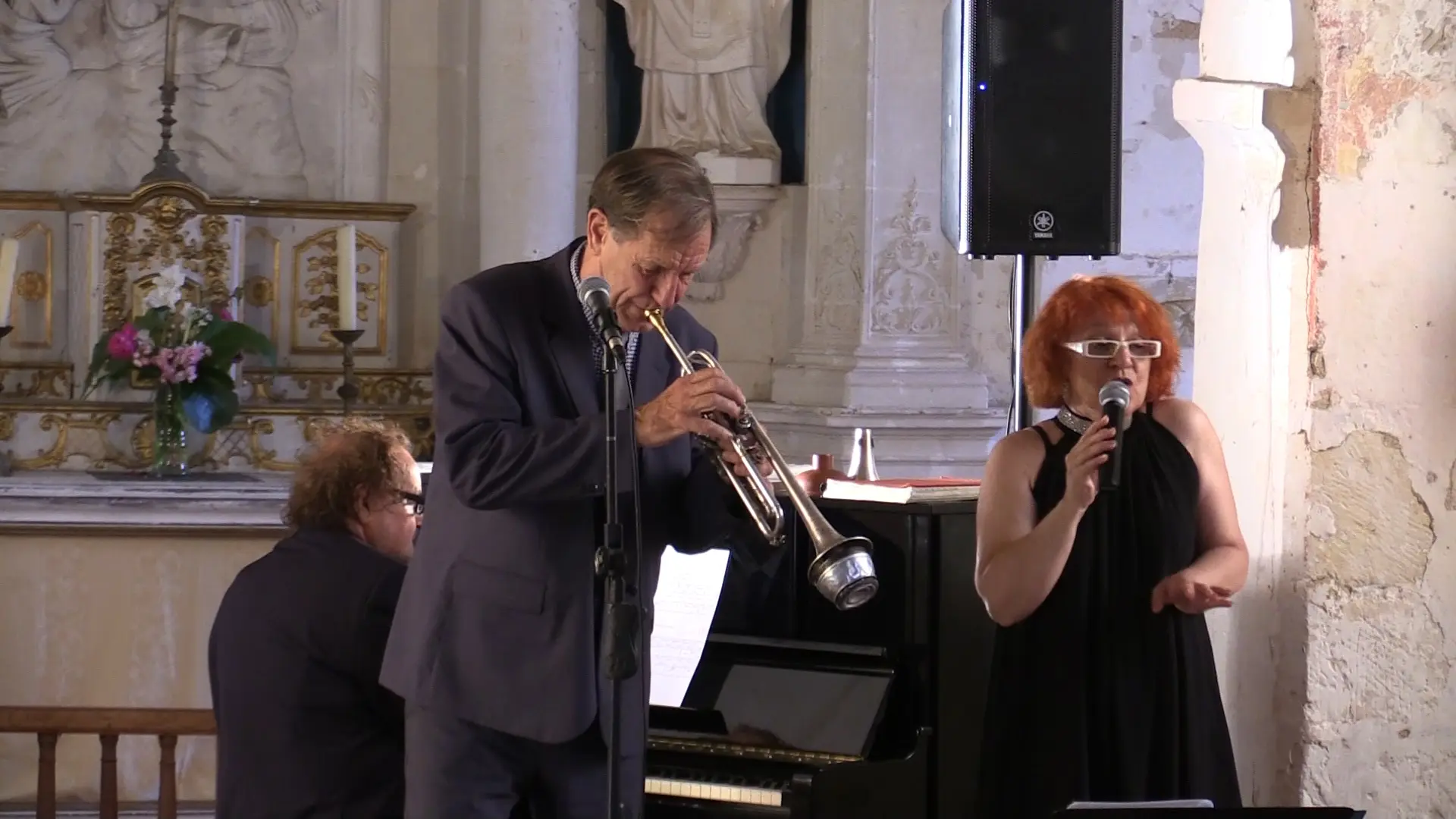
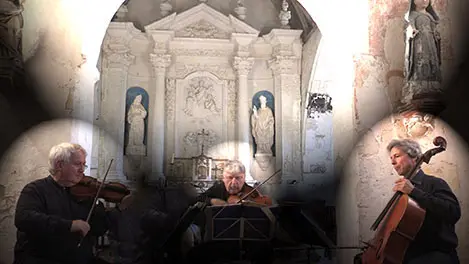
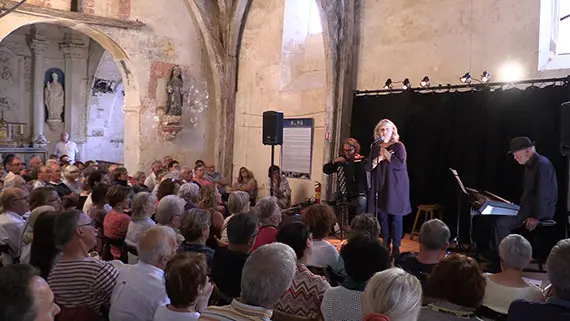
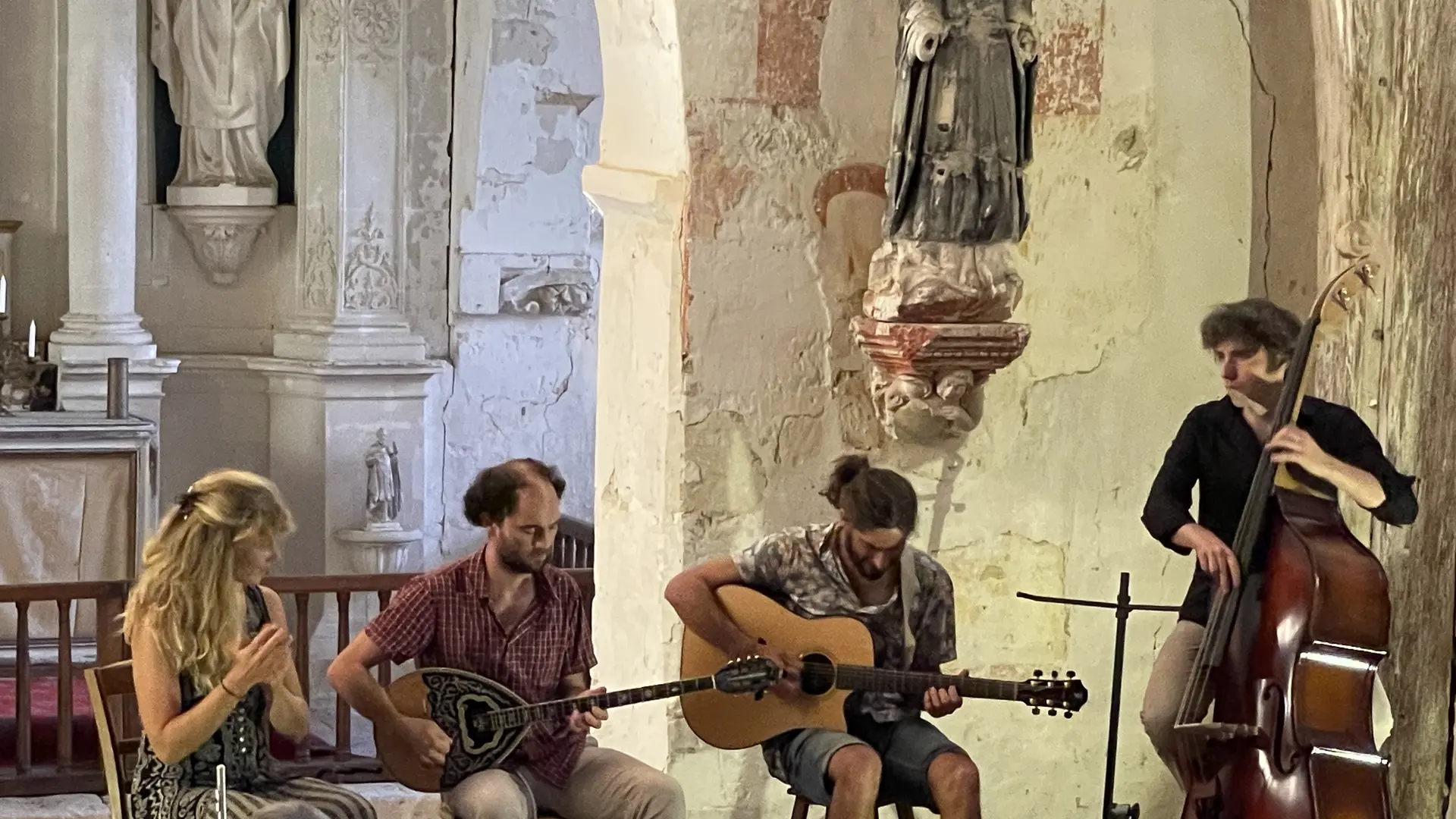
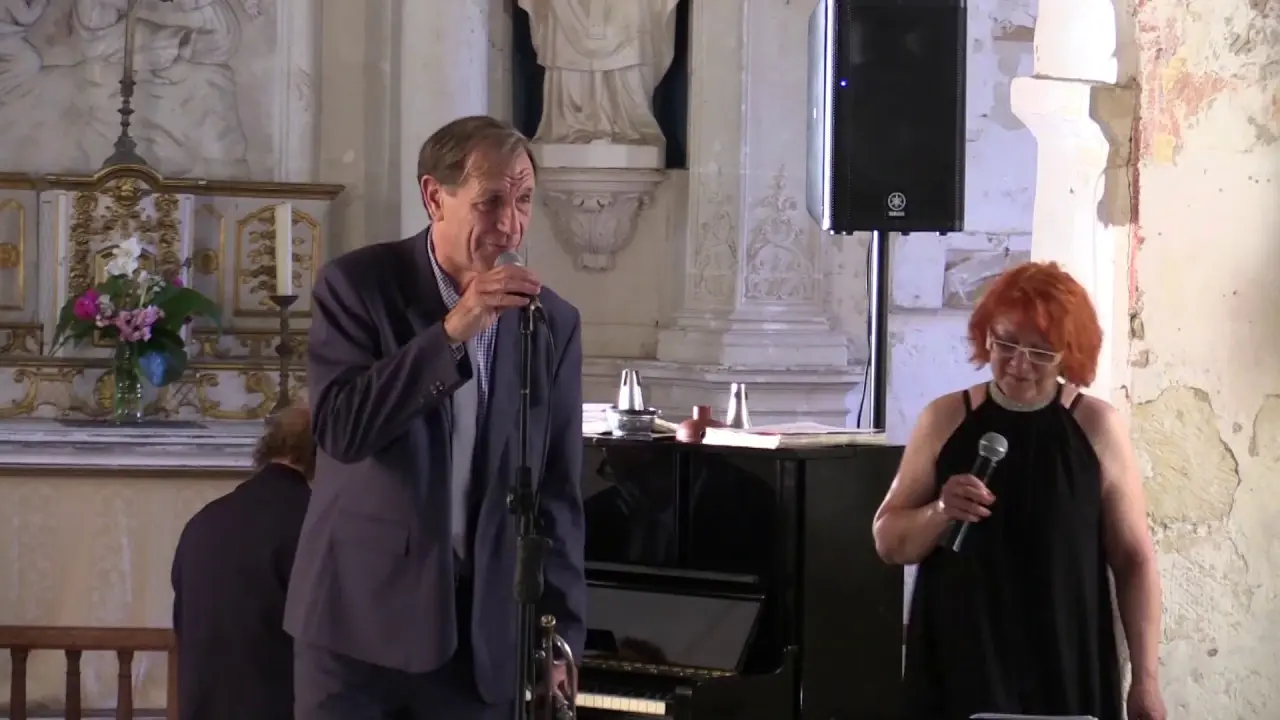
Since 2001, the association "Les Amis de Sainte-Cécile" (Friends of Sainte-Cécile), whose aim is to contribute to the restoration and cultural activities of the chapel, has been offering a programme of concerts, concerts and other events.
of the chapel offers a programme of events during the summer months, including concerts, group visits and exhibitions,
group visits, exhibitions, the European Heritage Days...
Information, history, itineraries, photos, videos, concert reports, site reports, on the association's website: https://www.chapellesaintececile-flee.net